
Designing an effective anaerobic digester is one of the core steps in producing stable and nutrient-rich liquid organic fertilizer. Whether the goal is to process manure slurry, food-processing wastewater, or high-moisture crop residues, a well-designed anaerobic fermentation tank can determine fermentation speed, nutrient conversion rate, and long-term operational cost. Below is a practical overview of the main design considerations for a reliable liquid biofertilizer digestion system.
Key Parameters That Shape an Anaerobic Digestion System
- Reactor Capacity and Hydraulic Retention Time
When working with high-moisture organic waste, the size of the fermentation tank must match the retention time required for complete microbial breakdown. Systems producing liquid biofertilizer often run on shorter retention cycles (10–20 days), but the actual volume depends on raw material dilution, solids content, and desired product concentration. Oversized tanks increase cost; undersized units cause unstable fermentation and odor problems.
- Temperature Control for Stable Fermentation
Most commercial liquid fertilizer processes use mesophilic digestion (30–38°C) because it provides a balance between microbial activity and energy consumption. Good insulation, circulating hot water jackets, or embedded heating coils help maintain temperature. Temperature fluctuations are one of the main causes of foaming, acidification, and low biogas yield, so thermal stability should be a priority in design.
- Mixing and Agitation Method
Homogeneous mixing prevents sediment buildup and ensures balanced nutrient release. Three common mixing methods include:
Mechanical agitators for thick slurry
Gas-lifting circulation using biogas generated inside
Submersible pumps for continuous recirculation
The choice depends on raw material viscosity and desired fermentation uniformity. Proper agitation also reduces the risk of dead zones and floating crusts inside the reactor.
- Material Selection and Anti-Corrosion Features
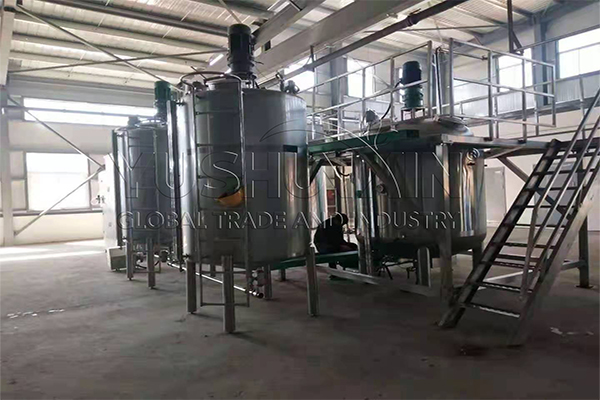
As liquid organic fertilizer contains ammonia, sulfur compounds, and organic acids, the digester must be built with corrosion-resistant steel, epoxy coatings, or composite materials. High-grade materials extend the lifespan of the anaerobic fermentation tank and reduce maintenance downtime. YUSHUNIN anaerobic tanks are made of high corrosion-resistant steel, welcome to consult us!
Integrating Equipment Into a Complete Liquid Fertilizer Line
A modern liquid fertilizer plant usually pairs the anaerobic digester with:
Raw-material receiving and pre-crushing units
Heating and circulation systems
Douplex filter for polishing the final product
Storage and dosing tanks for nutrient adjustment
Choosing a well-designed anaerobic digestion reactor not only increases organic matter conversion but also improves the quality, clarity, and stability of the final liquid biofertilizer. Many manufacturers now provide modular fermentation tanks that can be expanded or automated depending on the scale of production.
If you need equipment that matches specific raw materials—such as manure slurry, kitchen waste, or agricultural residue—specialized liquid fertilizer anaerobic digester systems can help optimize fermentation efficiency and reduce operating cost. If you want to know more about the information of liquid fertilizer anaerobic reactor, welcome to visit: https://www.liquidfertilizerplants.com/products/liquid-fertilizer-anaerobic-fermentation-tank/