
Pomace, as a by-product of fruit and vegetable processing, contains high moisture content often exceeding 80–90%. This organic waste includes apple pomace, grape pomace, olive pomace, and other residue from juice or wine production. Each type of pomace shows different fiber, sugar, and nutrient compositions, which influence its suitability for organic fertilizer production and granulating processes. For example, apple pomace with rich pectin content benefits composting and granule formation, while grape pomace provides valuable organic matter for soil improvement. Industries such as food processing, winemaking, and biowaste recycling require efficient water reduction systems that can handle large volumes of high-moisture pomace materials. Effective dehydration not only lowers transportation costs but also stabilizes the raw materials for further fertilizer manufacturing. Therefore, selecting appropriate drying equipment becomes essential for consistent fertilizer quality and cost-efficient production procedures.
What Are the Key Stages and Techniques in Pomace Moisture Reduction Processes?
Fertilizer production from pomace usually follows four major moisture control stages: mechanical dewatering, composting, wet granulating, and final drying. Each stage contributes to lowering the water content step by step—from more than 90% to below 10%. The first step uses a dewatering machine or screw press to remove free water quickly. The second step, composting, promotes biological heat generation inside compost piles, accelerating natural dehydration. The third stage involves a wet granulator or pelletizer, which forms uniform pomace fertilizer particles while adjusting internal moisture levels. Finally, the most critical stage is thermal drying, where rotary drum dryers achieve stable moisture reduction and uniform drying results. These technologies connect seamlessly to form a continuous production line that transforms wet pomace into granulated organic fertilizer ready for packaging or further pellet making.
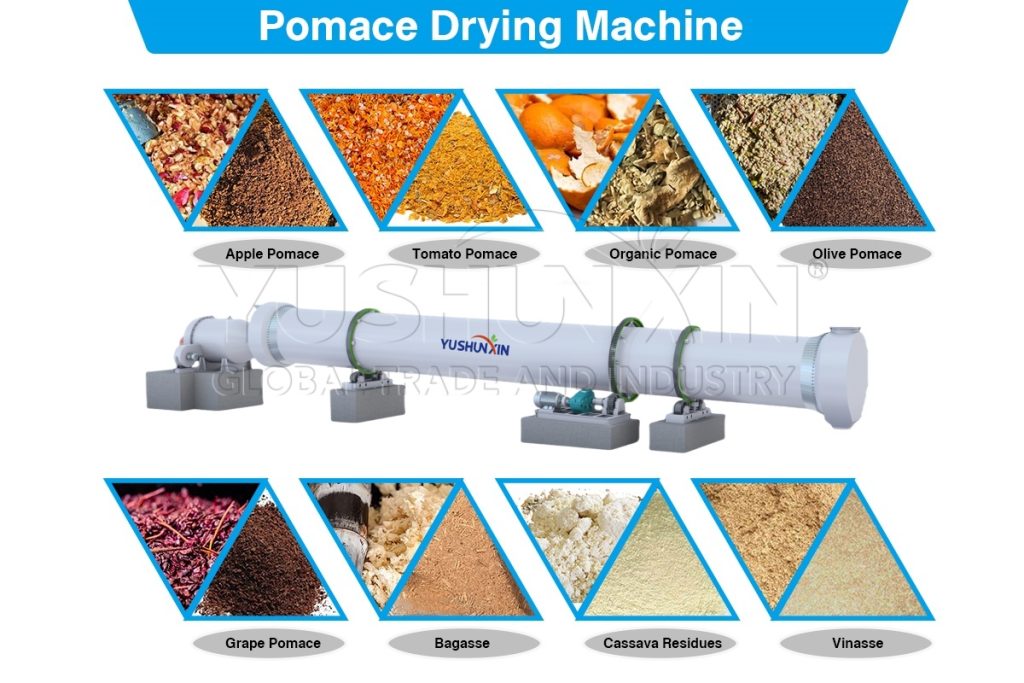
Why Does the Rotary Drum Dryer Become the Core Equipment in Moisture Reduction Systems?
Within the entire pomace fertilizer manufacturing process, the rotary drum dryer plays a decisive role. This machine operates through direct or indirect heat transfer, effectively removing bound water from granulated materials. Its rotating design ensures uniform drying, stable temperature control, and efficient heat utilization. Compared with traditional drying systems, the rotary drum dryer provides higher throughput, consistent particle size, and reduced energy consumption. Pomace fertilizer producers often face challenges of sticky materials, uneven airflow distribution, and rapid clogging. The structural optimization of modern rotary drum drying machinery addresses these issues through adjustable lifting plates, precise air volume design, and automatic control systems. As a result, this technology supports large-scale pomace processing, maintains granular integrity during drying, and extends equipment service life.
How Do Integrated Equipment Systems Optimize Pomace Fertilizer Production Efficiency?
Modern fertilizer production facilities prefer integrated systems that combine dewatering units, rotary drum dryers, composting equipment, and granulating machines. This combination builds a complete moisture reduction chain, ensuring continuous operation and stable product quality. When pomace enters the system, dewatering machinery reduces initial water content, composting reactors enhance biological activity, and granulators form consistent fertilizer granules. Afterward, the rotary drum dryer finalizes the moisture reduction process, delivering dry, flowable organic fertilizer particles. This coordinated design shortens drying time, stabilizes nutrient composition, and improves overall production efficiency. Continuous technological development in drying and granulation equipment strengthens sustainability by transforming high-moisture organic waste into valuable agricultural resources.
Conclusion
The latest trends in pomace moisture reduction focus on energy efficiency, automation, and production stability. Industries that transform fruit or vegetable pomace into organic fertilizer rely increasingly on integrated dewatering, composting, granulating, and drying systems. Among these technologies, the rotary drum dryer remains the core solution for achieving precise water content control and long-term operational reliability. Efficient water removal not only enhances fertilizer quality but also supports eco-friendly waste management and resource recovery. For enterprises seeking professional equipment and technical support in pomace fertilizer drying and granulation, a professional drying equipment manufacturer—Yushunxin—provides dependable machinery design and production solutions tailored to advanced moisture reduction needs. You can visit: https://www.fertilizerdryer.com/pomace-drying-machine/