
Establishing a successful organic fertilizer granulation plant demands careful financial planning and a well-structured investment strategy. The organic fertilizer production plant cost often becomes a decisive factor for investors and entrepreneurs seeking sustainable returns in the fertilizer granulating industry. By evaluating the essential raw materials, core machinery, and overall fertilizer plant setup cost, decision-makers can effectively manage budgets and optimize production efficiency.
What Types of Raw Materials Can You Use in Organic Fertilizer Granulation Procedures?
Choosing suitable raw materials directly affects the quality and cost of organic fertilizer granule production. Many sources provide high potential for organic fertilizer making, such as livestock manure, poultry litter, crop straw, kitchen waste, and municipal sludge. Livestock manure and poultry litter contain abundant nutrients and enhance the fertility of granulated fertilizer products. Crop straw and agricultural residues, when processed correctly, improve organic matter content and support the granulation process.
In addition, some manufacturers select fermented kitchen waste or specific industrial by-products to lower organic fertilizer production plant cost and utilize local resources efficiently. Each raw material presents unique characteristics for the granulating procedure, influencing both the composition and nutrient content of the finished organic fertilizer granules. When planning the investment, the cost and availability of raw materials should receive priority consideration, as they determine ongoing production expenses and the feasibility of scaling the organic fertilizer manufacturing process.
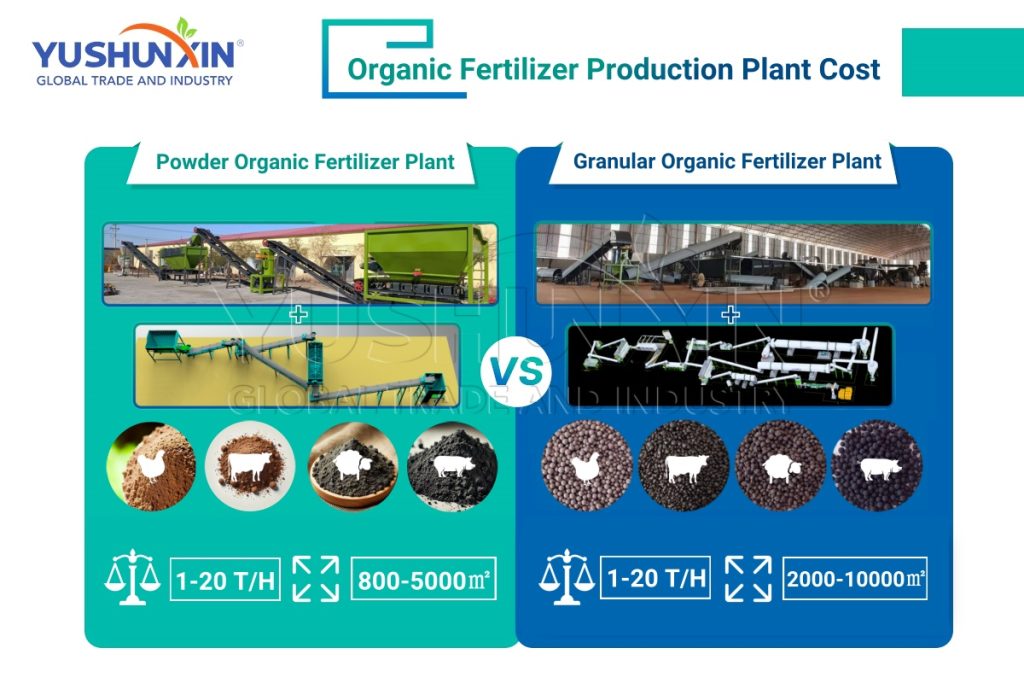
Which Machines Matter Most for Organic Fertilizer Granule Making and What Features Should You Consider?
The selection of fertilizer granulation machinery significantly impacts both the investment scale and the operational efficiency of an organic fertilizer pellet production line. Essential machines often include a crushing machine, a compost turner or fermentation equipment, a granulator (such as a disc granulator, rotary drum granulator, flat die granulator, or new type organic fertilizer granulator), as well as auxiliary machines like a rotary drying machine and a packing machine.
For instance, a disc granulator offers reliable granule size control, easy maintenance, and consistent output, while a drum granulator favors large-scale, continuous organic pellet manufacturing. Each granulating machine supports different materials and organic fertilizer particle sizes, so investors should compare features such as granulation efficiency, energy consumption, automation level, and material adaptability. Modern fertilizer pelletizing equipment may integrate advanced control systems to reduce labor costs and enhance stability in fertilizer granule production.
Additionally, the choice of auxiliary equipment, including screening machines for separating qualified organic fertilizer pellets and packing machines for efficient bagging, streamlines the entire production process. By selecting reliable fertilizer making machinery, owners can minimize downtime, reduce waste, and ultimately lower the overall organic fertilizer factory cost while ensuring consistent quality.
How Should You Calculate Organic Fertilizer Production Plant Cost and Plan Investment Allocation?
Evaluating the total organic fertilizer plant setup cost involves more than calculating machinery prices. Decision-makers must consider raw material procurement, site construction, installation, utilities, labor, and ongoing maintenance expenses. The scale of the intended fertilizer pellet making facility—whether a small granulating production line or a fully automated compound fertilizer plant—directly determines capital requirements.
Raw materials often account for a large portion of operational expenditure, especially when sourcing high-quality feedstock for granule pellet production. Machinery investment depends on production capacity; advanced granulators, compost machines, dryers, and packing units often require higher upfront fertilizer plant cost but deliver greater automation and lower long-term labor expenses. Investors should also account for compliance costs, such as environmental control systems and waste management, which impact the total fertilizer manufacturing plant cost.
By categorizing these expenses and creating a clear investment plan, business owners can anticipate returns and optimize the cost-benefit ratio of their organic fertilizer pellet manufacturing process. Partnering with an experienced fertilizer equipment supplier ensures access to reliable machines, technical support, and professional advice for efficient plant setup.
Conclusion
A thorough understanding of raw material selection, fertilizer granulating equipment, and detailed cost analysis forms the foundation of a successful organic fertilizer production business. By carefully evaluating organic fertilizer production plant cost and machinery features, investors can develop a sustainable and profitable production line. For those seeking expert guidance and quality equipment, a professional fertilizer equipment manufacturer such as Yushunxin offers tailored solutions to streamline the organic fertilizer granulation process and maximize return on investment. You can visit: https://www.fertilizerproductequipment.com/organic-fertilizer-production-plant-cost/