
Potato-chip and cassava-chip factories need controlled washing and dewatering because cut tubers release surface starch and carry free water into the next processing stage. Excess starch can create sticky product contact, cloudy process water, and residue that follows the slices toward blanching or frying. Excess surface water can also increase the thermal load when slices enter hot oil. A potato and cassava slice washing equipment before frying setup should therefore combine controlled agitation, impurity separation, water management, and dewatering instead of relying on a simple soak tank. The production team should match the washing method to slice thickness, raw-material condition, hourly output, fryer width, and final texture. A stable pretreatment system can support more predictable food frying, oil management, product handling, and snack manufacturing economics.
Why Does Surface Starch Matter in Potato and Cassava Slice Preparation Before Frying?
Cutting exposes fresh cell surfaces, so the washing stage needs to remove loose starch and cutting debris before heat treatment. Fried Food Solutions states that cut vegetables release starch after slicing and recommends vortex washing for French fries, potato chips, vegetable chips, and other cut materials. Cassava as a starch-rich storage root also requires careful preparation, although a project team should confirm the exact washer configuration through material testing because cassava varieties, slice thickness, and pretreatment recipes can differ.
A food processor should treat starch removal as part of the complete food preparation process because the next steps may include blanching, dewatering, air drying, frying, seasoning, and packaging. This coordinated food production procedure gives the factory better process management than one isolated washing machine and helps the production team keep the downstream fryer feed more consistent.
Which Washing Method Fits Potato and Cassava Slices Before Frying?
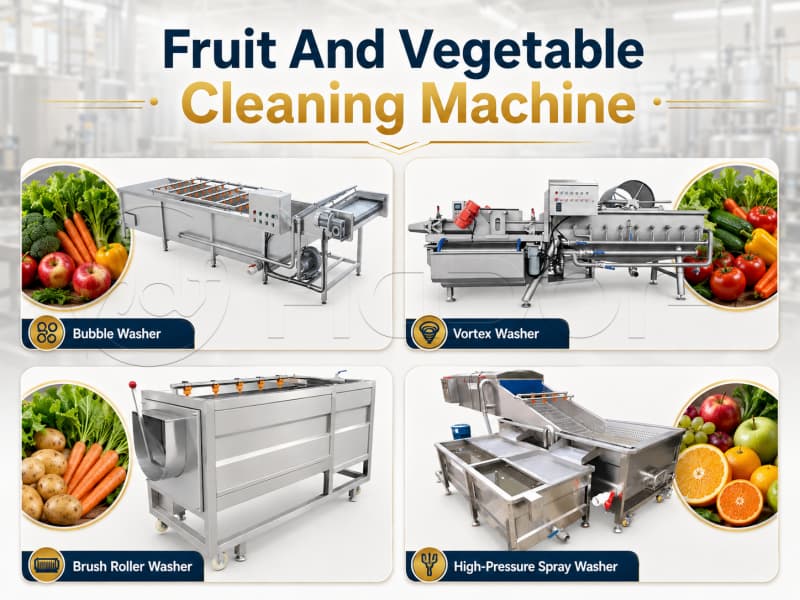
A factory should select washing intensity according to product size and fragility. The cleaning equipment page describes bubble washing for gentle handling and vortex washing for diced, sliced, and shredded vegetables. A vortex vegetable washer for removing surface starch from cut tubers can create stronger circulating water movement around slices, while bubble action can support gentler separation when the product needs softer treatment.
Potato slices and French fries appear directly in the application examples on the target page. Cassava slices need project-specific validation because raw-material firmness and slice thickness can change the best residence time and water movement. A buyer should therefore compare machine design, tank length, water circulation, filtration, drainage, food handling behavior, operating cost, and cleaning management before the factory commits its investment budget.
How Can a Pre-Frying Washing System Separate Starch, Sand, and Cutting Debris?
A pre-frying washing system for potato chips and cassava chips needs several separation mechanisms. Strong circulating water keeps cut pieces moving and exposes more surfaces to the washing flow. Bubble movement can lift light impurities, while heavier sand and debris settle toward collection areas. Overflow channels and circulating filtration can remove floating material and suspended solids from the process water.
The cleaning page explains that vortex water can separate starch, mud, and cutting debris after slicing, and it also describes sediment outlets and filtration functions in the broader cleaning system. This food washing technology reduces the burden on later food processing equipment because the fryer receives cleaner raw material and less loose residue. Furthermore, the production manager should control water replacement, filtration, sediment disposal, and sanitation according to the factory’s raw-material load and local water-management requirements.
Why Should Dewatering Follow Potato and Cassava Slice Washing Before Frying?
Washing solves one problem but creates another because clean slices leave the tank with surface water. A vibrating water drainer for washed potato and cassava slices can move the product forward while water passes through the screen. Fried Food Solutions lists a standard vibrating drainer with 1,000 kg/h capacity, 0.36 kW power, and a 2,000 mm length, and the equipment can operate after washing, blanching, or frying.
A potato or cassava processor should match the screen opening, vibration setting, feed depth, and inlet width to the slice dimensions. This dewatering procedure supports smoother food handling and lowers the load on an air dryer when the production line uses a second surface-drying stage before frying. In addition, controlled transfer between the washer and drainer can help reduce product piling and keep the downstream food manufacturing process more stable.
How Does Surface Water Control Affect Frying Stability and Oil Management?
The amount of free water that reaches hot oil affects the complete frying process. The cleaning page explains that its integrated vibrating dewatering section lowers surface moisture after washing, so less water enters the fryer and the production line can reduce oil splashing and maintain steadier oil temperature. An industrial cut-vegetable cleaning machine with vibrating dewatering therefore links pre-frying washing with later frying performance.
The factory should combine this food treatment step with consistent slice thickness, controlled feed rate, stable fryer temperature, and oil filtration. This food manufacturing system helps operators manage residues, surface moisture, and line cleanliness more systematically. The production team can also reduce unnecessary drying time when the washer and drainer deliver a consistent moisture load to the next machine. Consequently, a well-matched washing and dewatering section can support more predictable processing cost and operating management across the complete snack production line.
What Information Should a Buyer Provide for a Potato and Cassava Washing Line Quotation?
A useful quotation needs clear production data. The buyer should provide potato or cassava variety, slice dimensions, hourly capacity, soil and starch load, desired washing stages, available water, drainage conditions, fryer width, workshop dimensions, voltage, and downstream process. The buyer should also explain whether the line uses blanching, air drying, direct frying, seasoning, freezing, or packaging because each step changes equipment matching.
Fried Food Solutions processing equipment covers washing, blanching, frying, draining, cooling, seasoning, freezing, and packaging machinery, so a project team can compare the cleaning stage within the complete snack production system. A processor can review the fruit and vegetable cleaning machine options when the team evaluates bubble washing, vortex washing, filtration, dewatering, and line connection before a purchase. This approach gives buyers a clearer basis for machine cost, quotation comparison, investment planning, and future food production expansion.
In conclusion, potato and cassava slice pretreatment should control starch removal, water circulation, impurity separation, and surface moisture before frying. Vortex washing can support cut potato products, while the final cassava configuration should follow material testing and plant requirements. A vibrating drainer can reduce free water before air drying or frying, and the complete process should balance washer capacity with the fryer and downstream equipment. If a project team needs additional information about pre-frying cleaning configurations, the team can learn more at: