
A central kitchen, a snack maker, or a small frozen food plant that plans to make French fries usually weighs capacity, space, and equipment sequence before the first order. The french fries processing line for a small-scale food processing plant joins potato preparation, cutting, washing, blanching, frying, seasoning, and packing in one flow, and the right configuration keeps a compact factory productive without wasting floor space. This article explains the process steps, the capacity match, and the machine order that a buyer should check before choosing equipment.
Which Production Steps Belong in a Small-Scale French Fries Processing Line?
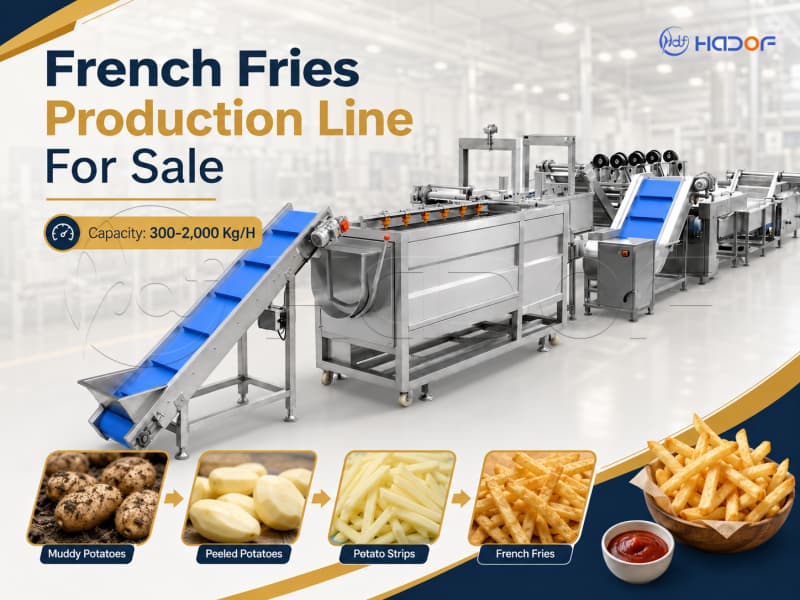
A complete line turns whole potatoes into packed fries through a fixed sequence, and a small plant still needs each step. The continuous French fries production line with potato preparation and frying covers washing, peeling, cutting, bubble washing, blanching, air drying, frying, de-oiling, seasoning, and packaging, and each machine removes a task that a worker would otherwise do by hand. A small factory can start with a tighter capacity while keeping the same process order, so the product quality matches a larger plant. This step-by-step flow also protects the food manufacturing process from mixing wet and dry stages.
How Does a Buyer Match Capacity to a Small Plant's Daily Output?
Capacity selection starts with the finished product a plant wants per shift, not with the largest machine a supplier offers. A buyer divides the daily fry target by the working hours, then adds a margin for changeover and cleaning, so a small line stays balanced across cutting and frying. An oversized fryer wastes energy and floor space, while an undersized cutter creates a bottleneck that stalls the rest of the line. A clear food production target therefore decides the food machinery size, and a balanced line runs closer to its planned cost.
Which Equipment Sequence Supports Potato Preparation and Frying?
The equipment order matters because each machine feeds the next, and a wrong handoff forces workers to move product by hand. A washing and peeling machine prepares the tubers, a sorting platform removes defects, a cutting machine makes uniform strips, and a bubble washer removes surface starch before blanching and air drying. The turnkey French fries production system for a snack factory then moves the dried strips into a continuous fryer, a de-oiling machine, a seasoning unit, and a packaging machine. A smooth sequence keeps the food handling steps short and protects the even color that customers expect.
How Does a Potato Washing and Peeling Machine Prepare the Product?
Clean, well peeled potatoes fry more evenly, so the washing stage shapes the finished fry before the oil ever touches it. A potato washing and peeling machine for potato strips removes mud, polishes the surface, and prepares tubers for cutting, and soft or hard brushes match the potato variety. A small plant that keeps this stage consistent avoids excess starch that clouds the fryer oil and lowers quality. This food preparation detail therefore protects both the product and the life of the frying equipment that follows it.
How Should a Buyer Compare Vendors and Support for Food Machinery?
French fries production rewards a supplier that offers engineering guidance as well as machines, because layout and after-sales service decide long term uptime. You can review the fried snack processing equipment manufacturer before a purchase, and that review shows spare parts, training, and the support behind the line. A careful food investment separates a tested line from a low quotation, and it protects a small plant from downtime it cannot absorb.
Conclusion
A small-scale food processing plant chooses a French fries line by keeping the full process sequence, matching capacity to daily output, and ordering the washing, cutting, blanching, frying, seasoning, and packing steps correctly. These checks keep a compact factory productive and protect fry quality. If you have interests, you can learn more about https://www.friedfoodsolutions.com/french-fries-production-line/