
A pelletizing disc gives your fertilizer plant a simple way to turn fine powder into round granules. The inclined disc rotates while a spray system adds moisture, and the powder rolls into balls through centrifugal force, friction, and gravity. Plant owners who process urea, diammonium phosphate, potassium chloride, and ammonium sulfate can adjust the disc angle and speed to control granule size. This equipment supports a fertilizer production line without the drying stage that some granulation methods require.
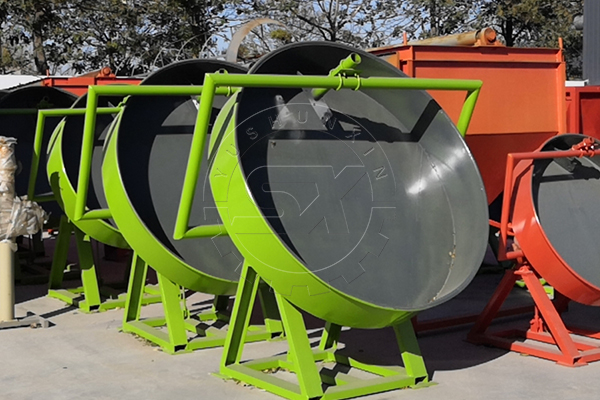
pelletizing disc
How does a pelletizing disc control granule size for urea, diammonium phosphate, potassium chloride, and ammonium sulfate?
Your operators can set the disc angle, edge height, and rotation speed to change how long the powder stays in the pan. A steeper angle keeps the material rolling longer and builds larger granules, while a lower angle discharges smaller pellets sooner. The scraper removes sticky powder from the disc wall and keeps the rolling bed even. A steady feed of urea, diammonium phosphate, potassium chloride, and ammonium sulfate helps the machine form uniform granules. These adjustments make the pelletizing disc system suitable for both small batches and continuous production.
How does the pelletizing disc raise production capacity in a fertilizer processing plant?
Capacity depends on disc diameter, motor power, and the speed of material discharge. A larger disc holds more powder and forms more granules per hour, while a smaller disc fits a compact workspace. You can also use three discharge outlets to reduce waiting time and keep the process moving. The disc granulator works with a crusher, screening machine, and packaging machine to create a complete flow. This arrangement lets your fertilizer manufacturing system produce consistent output without adding a dryer. When your market grows, you can install a larger pelletizing disc line or add more discs in parallel.
Which equipment features support reliable compound fertilizer granulation?
A stainless steel lining protects the disc from corrosion, and a reinforced plate bottom keeps the pan stable under load. The motor and reducer use a flexible belt drive for a smooth start, while high-temperature quenched gears extend service life. The automatic cleaning plate removes sticky material, so your workers spend less time cleaning the pan. These features support a measured fertilizer granulation technology for compound fertilizer production. You can also review compound fertilizer processing technology to see how the disc fits a larger NPK line. A fertilizer equipment manufacturer can provide disc sizes and motor data that match your plant capacity.
How can plant owners keep fertilizer manufacturing costs under control with a pelletizing disc?
The pelletizing disc uses low power and a simple process, so your team can start production without heavy infrastructure. You can avoid the energy and equipment cost of a dryer because the wet granules harden as the surface moisture evaporates. Regular cleaning and gear inspection keep maintenance predictable and prevent unplanned stops. These factors help you manage fertilizer production cost while keeping granule quality stable. For background on the nutrients in compound fertilizer, you can read the fertilizer reference. This practical structure gives your fertilizer processing plant a dependable granulation route from powder to packaged product.
Yushunxin can supply pelletizing discs and supporting equipment for compound fertilizer production. If your team has interest in the machine, you can learn more about https://www.fertilizerproductequipment.com/pelletizing-disc.